
Polyethylene

(C2H4)n

9002-88-4
| # | Parameter | Standart |
|---|---|---|
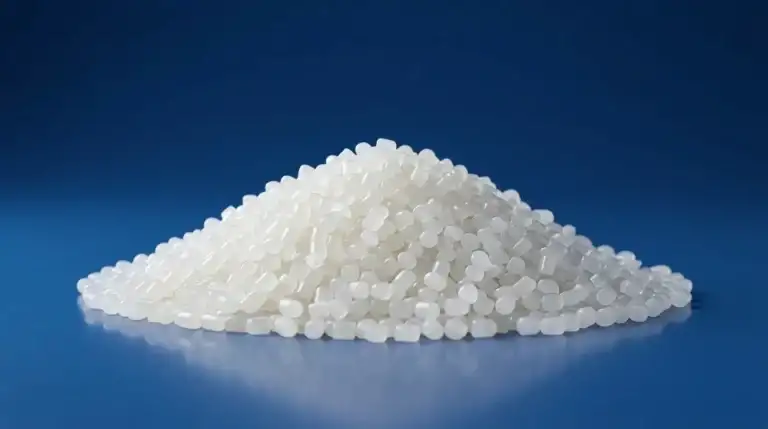
| 1 | Appearance | Opaque to translucent pellets or granules |
| 2 | Density (LDPE), typical | 0.910–0.925 g/cm³ |
| 3 | Density (HDPE), typical | 0.941–0.965 g/cm³ |
| 4 | Melt flow index (190 °C / 2.16 kg) | 0.05–20 g/10 min |
| 5 | Melting point range | 105–130 °C |
| 6 | Elongation at break | 200–800% |
| 7 | Water absorption (24 h) | <0.01% |
| 8 | Vicat softening temperature | ~90–115 °C |
Polyethylene (PE) is the most widely produced plastic in the world — a position it has held for decades and shows no signs of relinquishing. What makes PE so enduring is not a single outstanding property but a combination: lightweight, chemical resistance, flexibility across grades, processability on standard equipment, and a cost structure that no competing polymer has managed to undercut at scale.
In Brazil, the PE market is substantial and still expanding. The country is a global pioneer in bio-based PE production and one of Latin America's largest polyethylene consumers, with demand driven by packaging, construction, and agriculture — three sectors that continue to grow as the Brazilian economy urbanizes and industrializes.
Polyethylene is a thermoplastic polymer built from repeating ethylene units (–CH₂–CH₂–)ₙ. Its properties are determined not by the monomer itself but by chain architecture — how linear, how branched, and how dense the resulting polymer is. Three grades dominate industrial use:
HDPE (High-Density Polyethylene).
Highly linear molecular structure, density 0.941–0.965 g/cm³. The result is a rigid, tough material with excellent tensile strength and chemical resistance. Standard for pipes, rigid containers, drums, and industrial applications.
LDPE (Low-Density Polyethylene).
Branched molecular structure, density 0.910–0.925 g/cm³. Lower rigidity, high flexibility, and good clarity. The go-to material for films, plastic bags, food wraps, and squeeze bottles where pliability matters more than strength.
LLDPE (Linear Low-Density Polyethylene).
Linear backbone with controlled short-chain branching, density 0.910–0.940 g/cm³. Combines the flexibility of LDPE with superior puncture and tear resistance. Preferred for stretch films, agricultural covers, and packaging that must withstand transport stress.
PE's greatest commercial strength is that different grades serve fundamentally different industries — all under the same material family.
Packaging.
The largest single application globally. LDPE dominates flexible packaging — bags, wraps, pouches, and liners. LLDPE is preferred for stretch and pallet wrap films where puncture resistance and elongation are critical. HDPE handles rigid packaging: bottles, caps, drums, and bulk containers.
Construction and infrastructure.
HDPE pipes are the industry standard for water distribution, gas networks, and industrial fluid transport. Chemical inertness, flexibility, and long service life under pressure make HDPE the material of choice for buried pipeline systems throughout Brazil.
Agriculture.
PE films — primarily LDPE and LLDPE — are used extensively for greenhouse covers, mulch films, silage bags, and irrigation tubing. Brazil's large agricultural sector drives consistent demand for these applications year-round.
Industrial and consumer goods.
HDPE is used for crates, pallets, tanks, and industrial containers. LDPE and LLDPE appear in cable insulation, geomembranes, and specialty coatings.
PE is compatible with the full range of standard thermoplastic processing techniques. The choice of grade directly determines which process is appropriate:
Selecting the correct grade — matched to the processing method, melt flow index, and end-use performance requirement — is the primary technical decision in PE procurement. Grade mismatches result in processing problems and substandard finished products.
PE resin is supplied as granules or pellets and is stable under standard warehouse conditions. Key considerations:
Polyethylene is the foundational polymer of modern manufacturing — not because it does one thing exceptionally, but because different grades collectively cover an enormous range of industrial needs. Brazil produced approximately 1.5 million tonnes of PE films alone in 2024, accounting for nearly 42% of total Latin American production, underscoring how central polyethylene is to the country's industrial base.
As packaging, agriculture, and construction sectors continue to expand, demand for reliable supply of consistent-quality PE resin — matched to the right grade for each application — will remain a strategic procurement priority for Brazilian manufacturers.
Foscote Group supplies polyethylene resins across HDPE, LDPE, and LLDPE grades to manufacturers and processors throughout Brazil, providing grade-matched sourcing, reliable import logistics, and professional technical support for both volume industrial procurement and specialty applications.

The difference is molecular architecture. HDPE has a linear structure that produces rigidity and strength — ideal for pipes and hard containers. LDPE is branched, creating flexibility and clarity for films and bags. LLDPE adds controlled short-chain branching to a linear backbone, combining flexibility with toughness for stretch films and agricultural applications.
Yes. Food-grade PE grades are widely certified for direct contact with food and beverages. The specific grade and any additives must comply with applicable local and international regulations, including ANVISA requirements in Brazil.
Yes. HDPE (recycling code #2) and LDPE/LLDPE (recycling code #4) are both recyclable. Brazil's recycling infrastructure for PE is expanding, with significant investment in mechanical recycling capacity for post-consumer polyethylene.
Yes. Brazil is among the global leaders in bio-based PE production, with sugarcane-derived bio-PE available as a drop-in replacement that is chemically identical to fossil-based PE but with a significantly reduced carbon footprint.
Get in touch
with us!
We source products from reliable manufacturers across the globe and are always looking forward to connecting with new suppliers and customers.