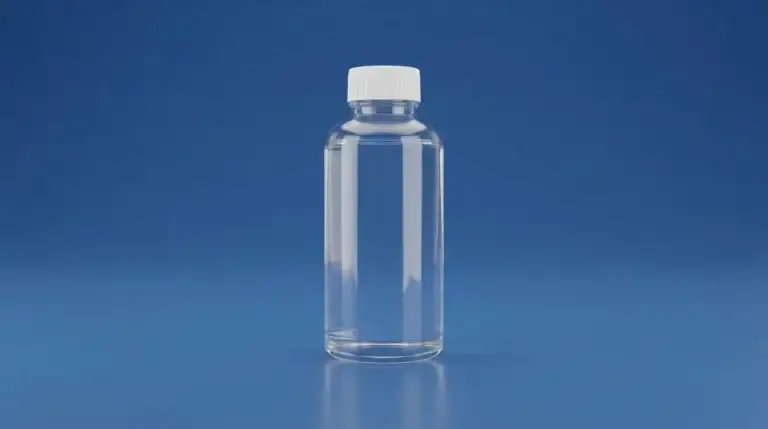

2-Propanol

C3H8O

67-63-0
| # | Parameter | Standart |
|---|---|---|
| 1 | Appearance | Clear, colorless liquid |
| 2 | Color, APHA (Pt-Co), max | 5–10 |
| 3 | Purity (GC), min | 99.5–99.8% |
| 4 | Water content, max | 0.1–0.2% |
| 5 | Boiling point | ~82.5 °C |
| 6 | Hazard class (transport) | Flammable liquid, Class 3 |
| 7 | Acidity (as acetic acid), max | 0.002% |
Isopropyl alcohol (IPA), chemically known as 2-propanol (CAS 67-63-0), holds a distinctive position in the industrial chemicals landscape: it functions simultaneously as a high-performance solvent and a proven disinfectant — a dual capability that few raw materials can offer. Its low toxicity, rapid evaporation, and full miscibility with water make it a preferred choice for formulators and process engineers across a wide range of industries.
In Brazil, demand for IPA as a chemical raw material is expanding steadily. The pharmaceutical, personal care, electronics, and industrial cleaning sectors are all increasing their consumption, driven by stricter hygiene standards, growing electronics manufacturing, and the continued professionalization of local formulation industries.
IPA is the simplest secondary alcohol, with a hydroxyl (-OH) group attached to the central carbon of a three-carbon chain. Its molecular formula is C₃H₈O. This configuration gives IPA a moderate polarity — enough to dissolve both water-soluble and many non-polar substances simultaneously.
Key performance properties:
IPA serves distinct, technically specified roles in each sector it touches — not as a generic solvent fill, but as a performance-critical input.
Electronics and semiconductor manufacturing.
IPA 99% is the standard cleaning agent for circuit boards, electrical contacts, optical sensors, and semiconductor wafers. Its non-conductive nature and residue-free evaporation make it uniquely suited for removing flux residues, thermal paste, and particulate contamination from precision assemblies.
Pharmaceuticals and healthcare.
IPA is used as a process solvent in API synthesis and extraction, a cleaning and decontamination agent for reactors and equipment, and a direct disinfectant for surfaces, instruments, and skin preparation. Pharmaceutical-grade (USP) IPA is required in GMP-regulated environments.
Coatings, inks, and adhesives.
IPA controls viscosity and accelerates drying in paints, lacquers, printing inks, and adhesive formulations — particularly valuable in fast-turnaround production lines.
Personal care and hygiene.
IPA is the active solvent and antimicrobial agent in hand sanitizers, antiseptic wipes, and topical formulations, where quick-drying and broad-spectrum efficacy are key performance requirements.
The correct grade of IPA is not a preference — it is a technical specification. Using the wrong concentration can compromise process outcomes and create compliance issues in regulated applications.
IPA 99% (anhydrous):
Required for electronics cleaning, semiconductor processing, and laboratory analytical work. Any residual water would damage sensitive substrates or interfere with analytical accuracy.
IPA 70%:
The validated concentration for surface disinfection in healthcare, pharmaceutical cleanrooms, and food-processing environments. The water content extends contact time on surfaces, improving bactericidal efficiency relative to anhydrous grades.
USP / pharmaceutical grade:
Meets pharmacopoeial purity specifications for GMP-controlled pharmaceutical and medical device manufacturing. Required wherever IPA contacts active pharmaceutical ingredients or enters regulated process streams.
IPA is classified as a flammable liquid and requires consistent safety protocols regardless of the scale of use:
Isopropyl alcohol is one of the most cross-sector chemical raw materials in active industrial use — equally essential on a pharmaceutical production line, in an electronics assembly cleanroom, and in a personal care formulation lab. Its versatility as both an IPA solvent industrial and a disinfectant gives it strategic importance that few single-compound inputs can match.
As Brazilian industries raise their formulation standards and expand into higher-value production, reliable access to grade-correct 2-propanol becomes an operational priority rather than a sourcing convenience.
Foscote Group supplies isopropyl alcohol across multiple purity grades — industrial, USP pharmaceutical, and electronic-grade — to manufacturers and formulators throughout Brazil, providing grade-verified quality, reliable import logistics, and dedicated technical support for both volume procurement and specialty R&D sourcing.
Concentration determines application suitability. IPA 99% is required for electronics and laboratory use where water must be excluded. IPA 70% is the standard for healthcare disinfection — the water content extends surface contact time, making it more effective against pathogens than anhydrous grades.
Yes, provided the grade meets applicable pharmacopoeial specifications (USP or equivalent). Pharmaceutical-grade IPA is used as a process solvent, equipment cleaning agent, and disinfectant in GMP-regulated environments. ANVISA regulations apply to pharmaceutical applications.
Food-contact use requires food-grade certified IPA and full compliance with Brazilian food safety regulations. Standard industrial grades are not appropriate for direct contact with food or food-contact surfaces.
Its combination of broad solvency, residue-free evaporation, and non-conductive properties makes it the safest and most effective option for cleaning sensitive electronic assemblies without risking substrate damage.
Get in touch
with us!
We source products from reliable manufacturers across the globe and are always looking forward to connecting with new suppliers and customers.