
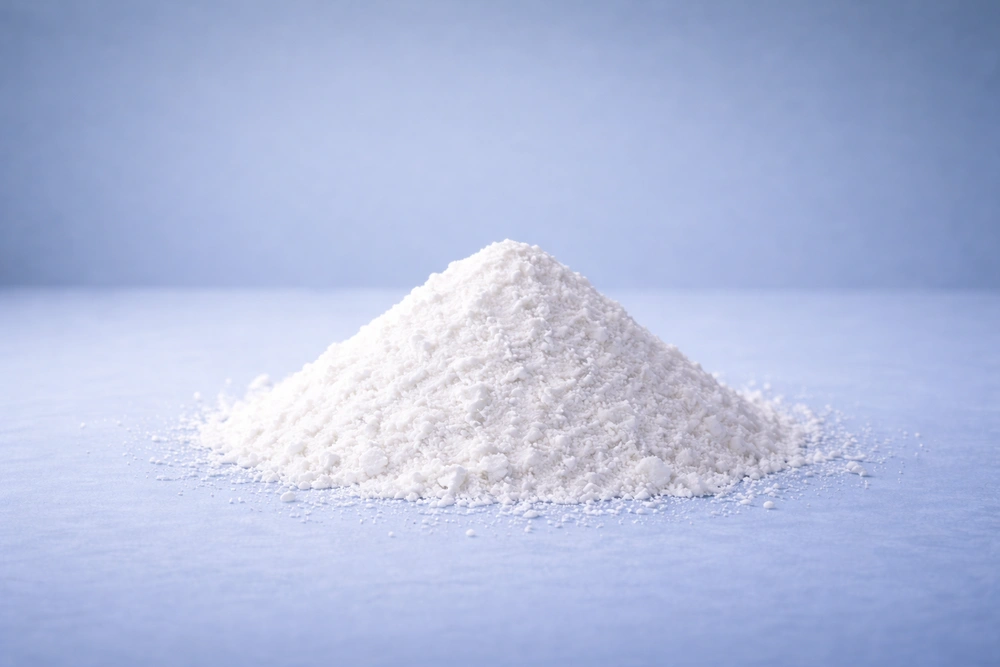

Titanium Dioxide

TiO₂
| # | Parameter | Standard |
|---|---|---|
| 1 | Appearance | White powder |
| 2 | Crystal form | Rutile / Anatase (on request) |
Titanium dioxide (TiO₂) is an inorganic compound made from titanium and oxygen. Known for its bright white color and high refractive index, it's widely used in industrial and commercial formulations. TiO₂ is distinct from titanium oxide, although the terms are often confused—titanium dioxide refers specifically to TiO₂, while "titanium oxide" can indicate other oxides of titanium.
Derived from titanium ore, primarily ilmenite and rutile, titanium dioxide plays a critical role in sectors such as paints, plastics, paper, cosmetics, and food. Its stability, brightness, and UV resistance make it indispensable. For anyone wondering what is titanium oxide, the answer lies in its chemical family; TiO₂ is simply the most stable and useful form of it.
Globally and in Brazil, the demand for titanium dioxide products continues to rise due to its broad functionality, especially in construction and consumer goods. In short, it’s a workhorse of modern materials science.
What makes TiO₂ stand out is its unique combination of optical, chemical, and physical features. The white titanium dioxide color is due to its ability to scatter visible light more effectively than most other materials, which is why it’s used to brighten and opacify everything from coatings to toothpaste.
Beyond its appearance, titanium dioxide offers:
A common point of confusion is the difference between titanium oxide vs titanium dioxide. While titanium oxide may refer to TiO or Ti₂O₃, titanium dioxide (TiO₂) is the most stable, non-toxic, and commercially valuable form.
As for the question is titanium dioxide natural, the answer is nuanced: while TiO₂ occurs naturally in minerals, the form used industrially is usually synthesized or refined to meet performance standards.
Titanium dioxide uses span nearly every major industrial sector. Its versatility and performance explain why it’s so widely adopted. Let’s explore some key applications:
The titanium dioxide consumption in Brazil is especially strong in paints, plastics, and food processing sectors, all of which demand consistent product quality.
Concerns about titanium dioxide health risks have grown in recent years, particularly around its use in food and airborne exposure in industrial settings. Scientific reviews have debated whether titanium dioxide is safe, especially when inhaled as nanoparticles.
Regulatory authorities around the world, including the EU and Brazil’s ANVISA, monitor its use. While some studies point to potential titanium dioxide toxicity, most agree that it’s safe in non-inhaled applications. In food, its status remains controversial, leading consumers to ask, is titanium dioxide safe in food and titanium dioxide faz mal—the latter being a common search phrase in Brazil meaning “is titanium dioxide harmful.”
Here’s a brief clarification of major terms:
Ultimately, titanium dioxide health risks are low when used as directed, but ongoing evaluation is crucial for consumer confidence.
Brazilian industries rely on titanium dioxide for a variety of high-performance applications. The titanium dioxide used for paints and coatings is among the most important in the country’s growing construction and automotive sectors. In packaging and plastics manufacturing, TiO₂ helps maintain product integrity under sun exposure.
Additional industries in Brazil include:
As Brazil’s economy grows, so does the titanium dioxide Brazil uses and grades. Premium grades are especially valued for their consistent performance, purity, and compliance with international safety standards.
Titanium dioxide is more than a pigment—it’s a vital ingredient in materials that shape modern life. From construction to food, and from cosmetics to coatings, its performance remains unmatched.
Foscote Group is proud to supply titanium dioxide across Brazil, offering dependable quality and logistics for clients in need of tailored solutions. Whether your business needs high-purity TiO₂ for food-grade applications or technical grades for manufacturing, Foscote ensures your supply is always on spec and on time.
Let’s move your business forward—reliably, safely, and efficiently—with one of the most important chemical compounds of our time.
Yes, titanium dioxide is considered safe in regulated amounts by many international health authorities. In Brazil, ANVISA sets clear limits for its use in food. However, ongoing global studies continue to evaluate long-term exposure. Always consult updated local regulations.
Titanium dioxide improves the visual appearance of products by enhancing whiteness and opacity. In foods, it's used for color stability in candies, chewing gum, and some dairy products. In cosmetics, it helps create smoother texture and better UV protection.
The primary sectors include:
- Paints and coatings – for brightness and durability
- Plastics and PVC – to improve color and heat resistance
- Construction – in cement, ceramics, and sealants
- Cosmetics and sunscreens – for whitening and UV protection
- Pharmaceuticals – as a coating agent for tablets
Titanium dioxide exists in nature (e.g., rutile, anatase), but industrial versions are typically processed and refined to meet purity and performance standards. Both forms share similar properties, but synthetic TiO₂ offers more consistency for commercial use.
Foscote Group is a trusted supplier of titanium dioxide across Brazil. With deep expertise, reliable logistics, and a strong portfolio, Foscote ensures high-quality TiO₂ for a variety of industrial applications.
Get in touch
with us!
We source products from reliable manufacturers across the globe and are always looking forward to connecting with new suppliers and customers.