
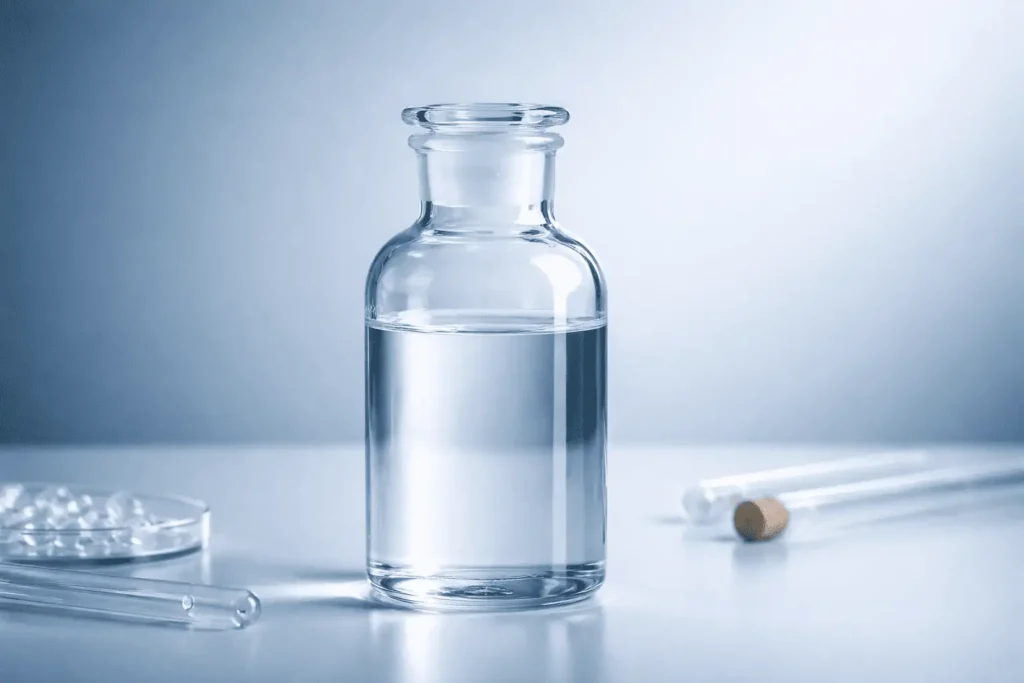

2-Hydroxyethyl Methacrylate

C6H10O3

868-77-9
| # | Specification | Value |
|---|---|---|
| 1 | Appearance | Clear colorless liquid |
| 2 | Purity (Ester content), %, min | ≥ 97 |
| 3 | Color (APHA), max | ≤ 20 |
| 4 | Water content, %, max | ≤ 0.2 |
| 5 | Acid value, %, max | ≤ 0.2 |
| 6 | Specific gravity (20°C) | 1.065 – 1.075 |
| 7 | Inhibitor (MEHQ), ppm | 200 ± 20 |
| 8 | Boiling point, °C | Available upon request |
2-Hydroxyethyl Methacrylate (HEMA) is a widely used methacrylate monomer valued for the way it balances high reactivity with moderate hydrophilicity. Within polymer formulations, it helps introduce polar groups into resin structures while maintaining the durability and strength expected from modern materials. Because of this versatility, HEMA has become a practical choice for formulators looking to improve adhesion, flexibility, and overall processing performance.
Across Brazil, demand for HEMA continues to expand, particularly in coatings, adhesive systems, and specialty polymer production. Local manufacturers are increasingly incorporating this monomer to develop materials that deliver reliable performance while meeting stricter technical and quality expectations in industrial applications.
From a structural standpoint, HEMA consists of a methacrylate group linked to a 2 Hydroxyethyl side chain. This configuration gives the molecule two essential characteristics: strong participation in radical polymerization and the presence of a hydroxyl group capable of forming hydrogen bonds.
As a result, HEMA exhibits:
These properties allow formulators to fine‑tune adhesion, flexibility, and moisture response without destabilizing the polymer matrix.
HEMA is used across multiple industrial sectors where functional performance matters more than bulk volume. Its most common applications include:
Rather than acting as a filler component, HEMA is typically used as a performance modifier that directly influences final product behavior.
Within polymer formulations, HEMA enhances adhesion to metals, glass, and engineered plastics by increasing surface affinity. It also improves flexibility and crack resistance, especially in thin films and dynamic applications. Moisture interaction is another key advantage, allowing better wetting and bonding in water‑based or hybrid systems.
In technical documentation and internal specifications, this functionality is often referenced as hema 2, indicating its role as a secondary functional monomer used to adjust performance without altering the core resin backbone.
HEMA should be stored in sealed containers, protected from heat, light, and contamination to avoid premature polymerization. In industrial environments, standard precautions apply:
When handled correctly, HEMA offers stable processing behavior and consistent results in production settings.
HEMA remains a strategically important monomer due to its ability to improve adhesion, flexibility, and durability across a wide range of polymer systems. Its versatility makes it valuable in coatings, adhesives, medical materials, and specialty resins, particularly as Brazilian industries continue to demand higher‑performance formulations.
Foscote Group supplies 2‑Hydroxyethyl Methacrylate and other chemical raw materials to companies across Brazil, providing reliable logistics, consistent quality, and professional support for industrial and R&D applications.
HEMA contains a hydroxyl group, which gives it higher polarity and better surface interaction compared to non‑functional methacrylates.
Yes. Its controlled hydrophilicity makes it particularly useful in water‑borne coatings and hybrid polymer formulations.
HEMA allows strong adhesion and controlled flexibility, which are critical for light‑curable and specialty biomedical polymers.
Absolutely. It is commonly copolymerized with other acrylates and methacrylates to fine‑tune performance properties.
Get in touch
with us!
We source products from reliable manufacturers across the globe and are always looking forward to connecting with new suppliers and customers.